

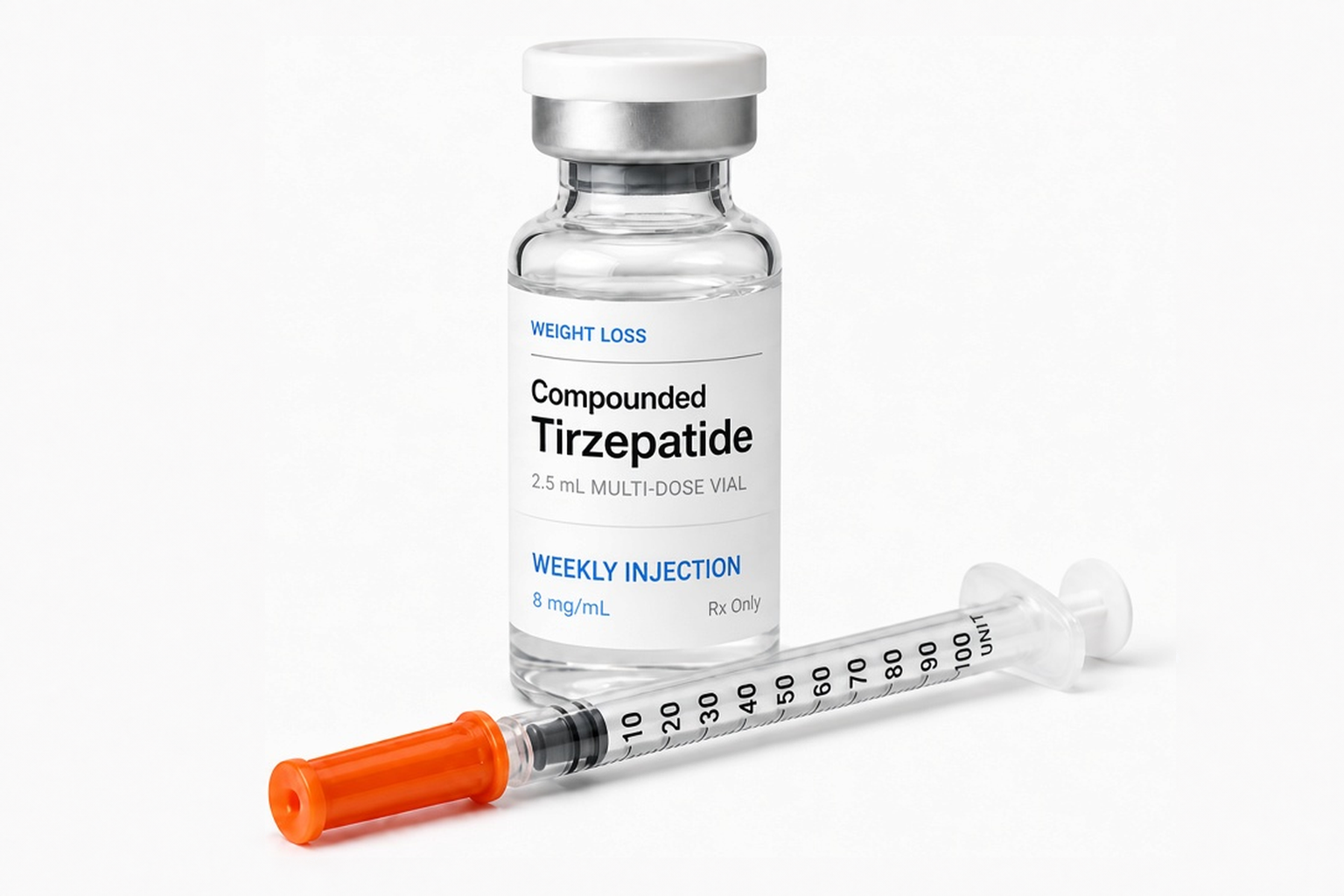
Zepbound (Tirzepatide) Injection – Chronic Weight Management
$130.00
FDA-Approved Dual GIP/GLP-1 Receptor Agonist for Sustained Weight Reduction
Zepbound® (tirzepatide) is an injectable prescription medicine indicated for adults with obesity (BMI ≥30\ge 30) or overweight individuals (BMI ≥27\ge 27) with weight-related medical conditions.
- Mechanism: Dual incretin mimic (GIP + GLP-1) targeting appetite regulation and metabolic control.
- Proven Results: Up to 20.9% to 22.5% average body weight reduction in clinical trials.
- Administration: Easy-to-use, pre-filled single-dose pen injected once weekly.
- Doses Available: 2.5 mg, 5 mg, 7.5 mg, 10 mg, 12.5 mg, and 15 mg.
Requires medical consultation and valid prescription. Temperature-controlled express delivery.
1. Indications & Approvals
buy Zepbound (Tirzepatide) Injection Pens – Chronic Weight Management
- Zepbound: Approved by the FDA (November 2023) for chronic weight management in adults who have:
- A Body Mass Index (BMI) of ≥30 kg/m2\ge 30\ \text{kg/m}^2 (obesity), or
- A BMI of ≥27 kg/m2\ge 27\ \text{kg/m}^2 (overweight) in the presence of at least one weight-related comorbid condition (e.g., hypertension, dyslipidemia, type 2 diabetes, obstructive sleep apnea, or cardiovascular disease).
- Note: Must be used in conjunction with a reduced-calorie diet and increased physical activity.
- Mounjaro: Approved for improving glycemic control in adults with Type 2 Diabetes Mellitus.
2. Mechanism of Action (MOA)
Unlike single-receptor agonists such as semaglutide (Ozempic/Wegovy), which target only GLP-1, tirzepatide acts as a twin incretin mimetic:
- GIP (Glucose-Dependent Insulinotropic Polypeptide) Receptor Activation:
- Modulates fat metabolism, improves insulin sensitivity in adipose tissue, and works synergistically with GLP-1 in the brain to reduce nausea and amplify satiety.
- GLP-1 (Glucagon-Like Peptide-1) Receptor Activation:
- Delays gastric emptying (slowing digestion).
- Acts on hypothalamic appetite centers to decrease hunger and reduce cravings (“food noise”).
- Stimulates glucose-dependent insulin secretion and suppresses inappropriate glucagon secretion.
3. Efficacy: Key Clinical Findings (SURMOUNT Trials)
In the pivotal phase 3 SURMOUNT-1 trial (over 72 weeks in adults with obesity/overweight without diabetes):
- 5 mg/week: ~15.0% mean body weight reduction.
- 10 mg/week: ~19.5% mean body weight reduction.
- 15 mg/week: ~20.9% to 22.5% mean body weight reduction (average loss of roughly 52 lbs / 23.6 kg).
- Over one-third of participants on the highest dose lost ≥25%\ge 25\% of their body weight.
4. Dosing & Administration
- Method: Subcutaneous injection once weekly into the abdomen, thigh, or upper arm, at any time of day, with or without food.
- Titration Schedule:
- Starting Dose: 2.5 mg2.5\ \text{mg} once weekly for 4 weeks (treatment initiation dose; not intended for weight reduction).
- Escalation: Increase to 5 mg5\ \text{mg} weekly for at least 4 weeks.
- Further Increases: If additional weight loss is needed and tolerated, dosage can increase in 2.5 mg2.5\ \text{mg} increments every 4 weeks.
- Maintenance Doses: 5 mg5\ \text{mg}, 10 mg10\ \text{mg}, or 15 mg15\ \text{mg} weekly.
- Maximum Dose: 15 mg15\ \text{mg} once weekly.
5. Adverse Effects & Safety Warnings
Common Side Effects (primarily gastrointestinal)
- Nausea (~25–30%)
- Diarrhea (~20%)
- Vomiting (~8–12%)
- Constipation (~11–17%)
- Dyspepsia (heartburn/indigestion) and abdominal pain
- Fatigue and injection-site reactions
(Gastrointestinal symptoms are most pronounced during dose escalation and typically subside over time.)
Critical Warnings & Contraindications
- Boxed Warning (Thyroid C-Cell Tumors): Contraindicated in patients with a personal or family history of Medullary Thyroid Carcinoma (MTC) or Multiple Endocrine Neoplasia syndrome type 2 (MEN 2).
- Pancreatitis: Discontinue promptly if acute pancreatitis is suspected.
- Gallbladder Disease: Increased incidence of cholelithiasis (gallstones) and cholecystitis associated with rapid weight loss.
- Acute Kidney Injury: Usually secondary to dehydration from severe vomiting or diarrhea.
- Hypoglycemia: Risk is increased if used in combination with insulin or insulin secretagogues (e.g., sulfonylureas).
- Oral Contraceptive Interaction: Delayed gastric emptying can reduce the absorption of oral contraceptives. Patients taking oral birth control pills are advised to switch to a non-oral method or add a barrier method for 4 weeks after initiating treatment and for 4 weeks after each dose escalation.
Be the first to review “Zepbound (Tirzepatide) Injection – Chronic Weight Management”
Related products

Buy Phentermine Online
Reviews
There are no reviews yet.