Drug interactions, Drug safety
8 Over-the-Counter Medicines You Should Never Mix With Prescription Drugs
 otc-medicines-to-avoid-with-prescriptions.jpg
Grabbing Tylenol or Ibuprofen seems harmless. But when you’re already on prescription meds, that “safe” OTC drug can become risky.
Over-the-counter medicines don’t need a prescription, so most people don’t check for interactions. That’s how problems start.
If you take any prescription medication, read this before your next pharmacy or grocery run.
Why OTC + Prescription Interactions Are So Common
OTC drugs still affect your liver, kidneys, blood, and nervous system. When you combine them with prescriptions that do the same thing, you get a double effect.
Example: A blood pressure pill + Ibuprofen = extra strain on kidneys. A sleep aid + Cold meds = extreme drowsiness.
Rule: Always tell your pharmacist or doctor about every OTC, vitamin, and supplement you take. Even if it’s “just for a headache.”
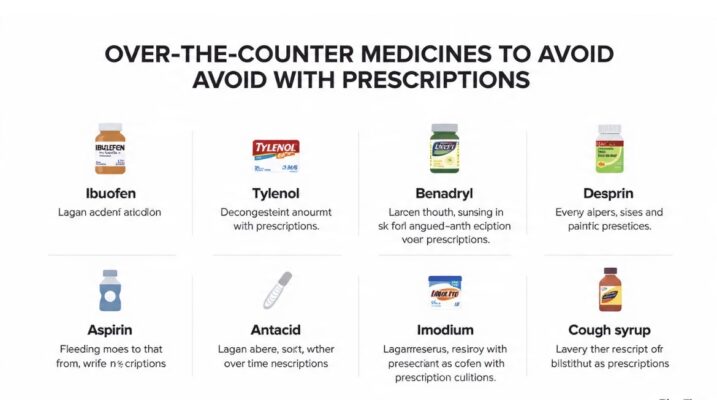
8 Over-the-Counter Medicines to Be Careful With
| OTC Type | Common Examples | Risk With Prescriptions | Safer Alternative Tip |
|---|---|---|---|
| NSAID Pain Relievers | Ibuprofen, Naproxen | Blood pressure meds, diuretics, blood thinners = Kidney + bleeding risk | Ask about Acetaminophen if approved |
| Acetaminophen | Tylenol | Statins, anti-seizure drugs, alcohol = Liver strain | Check cold meds for hidden Tylenol |
| Sedating Antihistamine | Diphenhydramine | Anti-anxiety, sleep meds, antidepressants = Extreme drowsiness | Ask about non-drowsy options |
| Decongestants | Pseudoephedrine, Phenylephrine | Blood pressure meds, MAOIs = High BP, fast heart rate | Use saline spray if safe |
| Aspirin | Low-dose or regular | Blood thinners = Major bleeding risk | Only with doctor approval |
| Antacids | Calcium, Magnesium antacids | Thyroid meds, antibiotics, iron = Poor absorption | Separate by 2-4 hours |
| Anti-Diarrheal | Loperamide | Heart rhythm meds, some antibiotics = Heart issues | Use only as directed |
| Cough Suppressant | Dextromethorphan DXM | Antidepressants = Serotonin syndrome risk | Check label, ask pharmacist |
1. Ibuprofen, Naproxen – NSAID Pain Relievers
Examples: Advil, Motrin, Aleve
Risk With: Blood pressure meds, diuretics, blood thinners
Why: Can reduce kidney function, increase bleeding risk, and raise blood pressure. Safer swap: Acetaminophen, if your doctor says it’s okay.
2. Acetaminophen – Tylenol
Risk With: Statins, some anti-seizure drugs, heavy alcohol use
Why: Both can strain the liver. Too much combined = liver damage risk. Key tip: Check labels. Many cold meds already have Tylenol in them.
3. Diphenhydramine – Allergy/Sleep Aids
Examples: Benadryl, ZzzQuil
Risk With: Anti-anxiety meds, antidepressants, sleep prescriptions
Why: Extreme drowsiness, confusion, slowed breathing. Safer swap: Non-drowsy antihistamines like Loratadine, but still ask first.
4. Decongestants – Cold & Sinus Meds
Examples: Pseudoephedrine, Phenylephrine in Sudafed, Dayquil Severe
Risk With: Blood pressure meds, MAOIs, some antidepressants
Why: Can spike blood pressure and heart rate to dangerous levels.
5. Aspirin – Low-Dose or Regular
Risk With: Blood thinners like Warfarin, Eliquis, Plavix
Why: Major bleeding risk. Even low-dose aspirin can be dangerous without doctor approval.
6. Antacids – Heartburn Relief
Examples: Calcium carbonate Tums, Magnesium hydroxide Milk of Magnesia
Risk With: Thyroid meds, antibiotics like Cipro, iron supplements
Why: Antacids bind to drugs and stop them from being absorbed. Key tip: Take these meds 2-4 hours apart.
7. Loperamide – Anti-Diarrheal
Example: Imodium
Risk With: Certain heart rhythm meds, some antibiotics
Why: Can cause serious heart rhythm problems at high doses or with interactions.
8. Cough Suppressants – Dextromethorphan DXM
Examples: Robitussin DM, Dayquil/Nyquil Cough
Risk With: Antidepressants, especially SSRIs and MAOIs
Why: Risk of “serotonin syndrome” which can be life-threatening.
3 Safe Habits to Avoid OTC + Rx Problems
- otc-prescription-safety-habits.jpg
- 1. Read the Active Ingredients: 2 products often have the same drug. Don’t double-dose Tylenol.
- 2. Use One Pharmacy: Your pharmacist sees everything and can flag interactions instantly.
- 3. Ask Before You Buy: Show the OTC box to your pharmacist and say “I take [med name]. Is this safe?”
FAQ: OTC and Prescriptions
1. Are natural or herbal OTCs safer?
No. Herbal products like St. John’s Wort or Ginkgo can interact just as strongly as drugs.
2. How long should I wait between meds?
It depends on the drugs. For antacids, 2-4 hours is common. For others, it varies. Ask your pharmacist.
3. What if I already took them together?
Don’t panic. Call your pharmacist or Poison Control at 1-800-222-1222 in the U.S. They can advise you right away.
Medical Disclaimer: *This article is for educational purposes only and is not medical advice. Drug interactions are complex and depend on your health, dose, and other medications. Always talk to your pharmacist or doctor before taking any OTC medicine with a prescription. If you have symptoms of a severe reaction, seek medical care immediately.*
You could also like
